
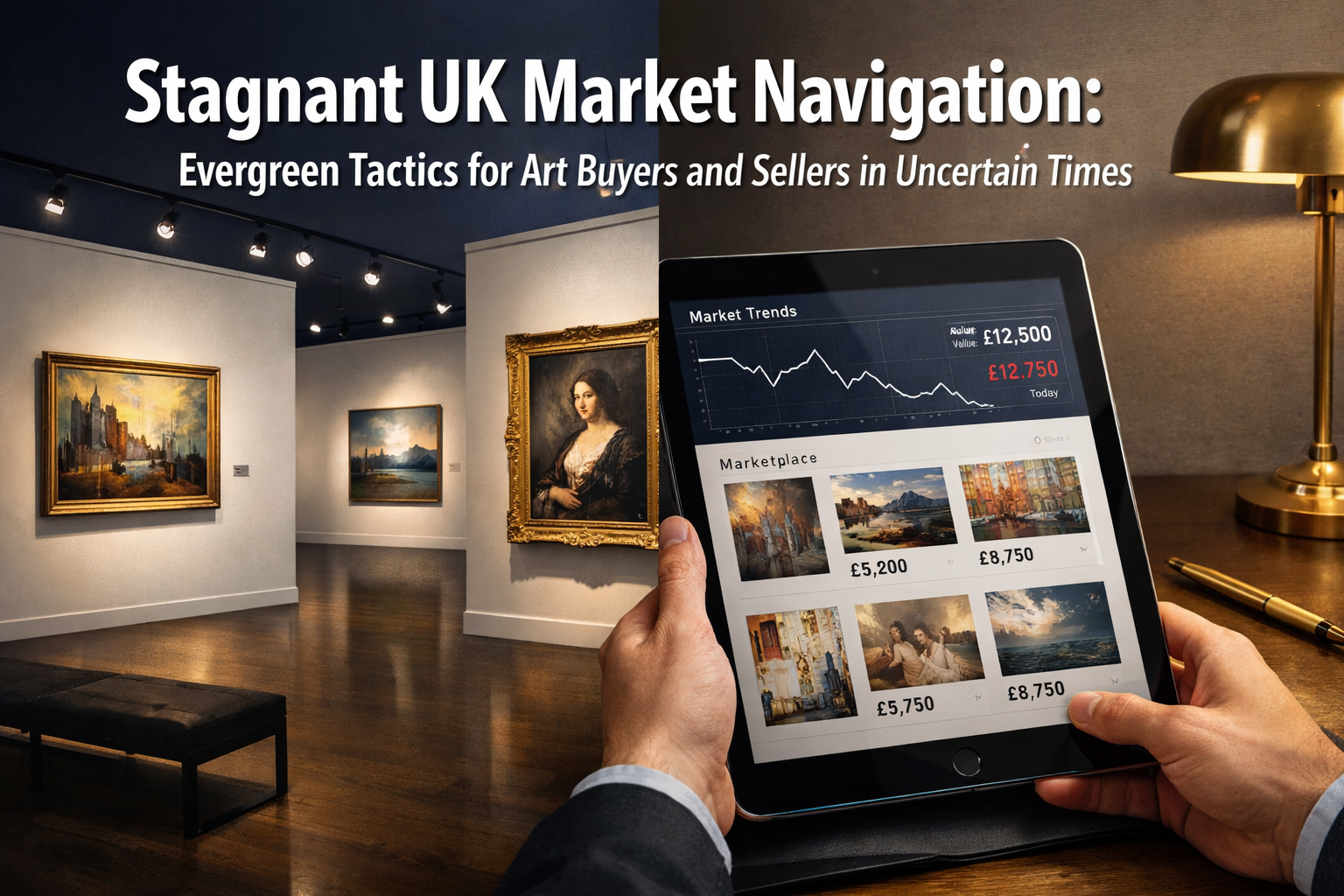
Quick Answer
The UK art market held steady at $10.5 billion in 2025 with modest 2% growth, but most gains came from public auctions whilst gallery sales remained flat[3]. For both buyers and sellers navigating stagnant UK market conditions, success depends on timeless fundamentals: confident pricing, strong digital presence, authentication rigour, and strategic timing rather than chasing trends. These evergreen tactics work regardless of market sentiment.
Key Takeaways
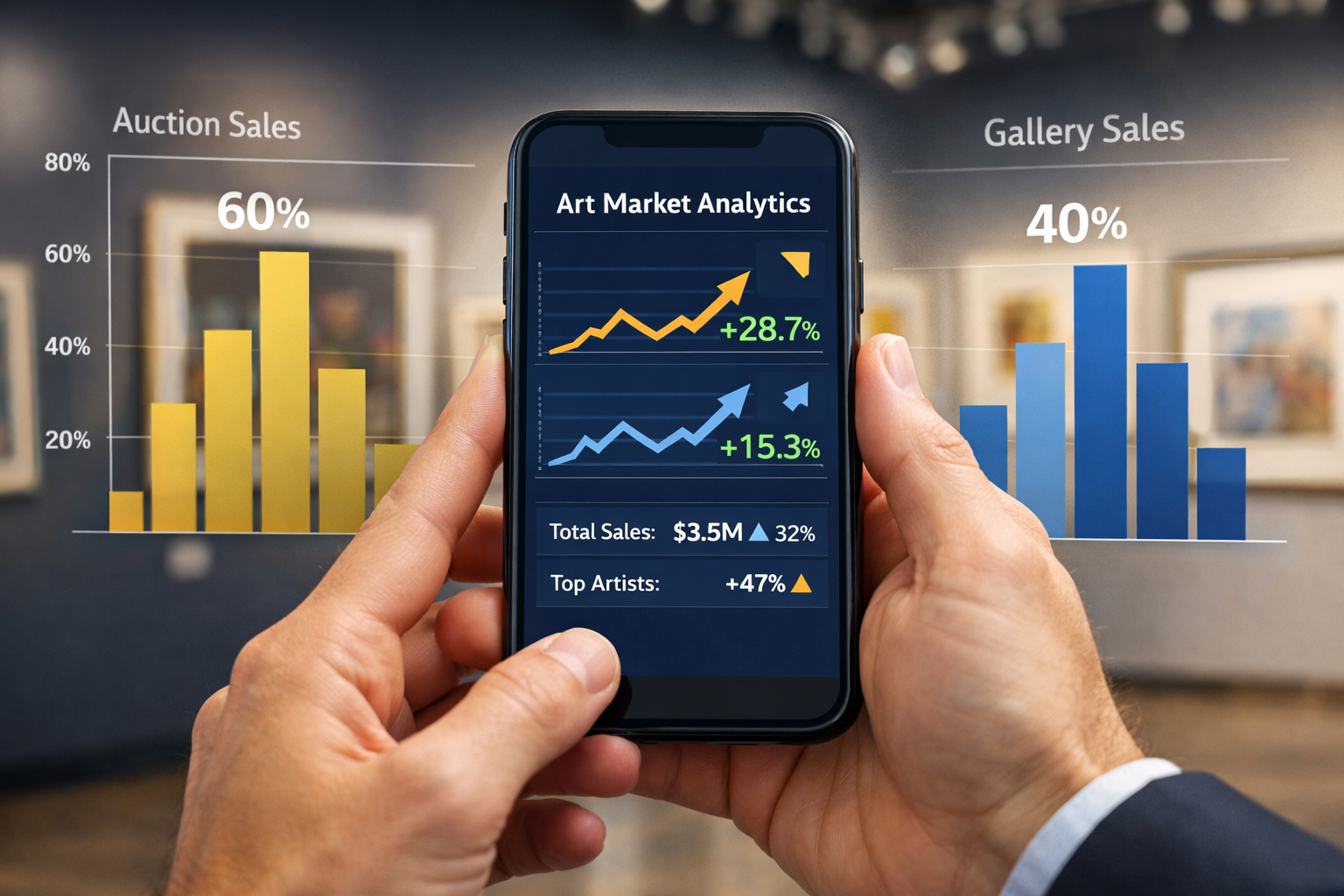
- UK market growth is auction-driven: Public auctions rose strongly in 2025, but gallery sales increased only 2%, signalling uneven recovery across channels[7]
- China overtook UK as second-largest market: The UK now ranks third globally with 17% market share, down from second place, as China captured 19%[10]
- Pricing confidence matters more than discounts: Sellers who maintain consistent, justified pricing build trust and attract serious buyers even during stagnation
- Digital signals drive discovery: Strong online presence, professional photography, and clear provenance documentation separate successful sellers from invisible ones
- Authentication protects value: Rigorous verification processes safeguard both buyers and sellers from costly mistakes in uncertain times
- Strategic timing beats panic selling: Understanding seasonal patterns and collector behaviour yields better outcomes than reactive price cuts
- Emerging artists show resilience: Works under £5,000 continue attracting new collectors, particularly pieces addressing environmental and contemporary themes[4]
What Does UK Market Stagnation Actually Mean for Art Transactions?
Market stagnation means sales volumes and values remain relatively flat compared to previous years, creating a challenging environment where neither buyers nor sellers hold clear advantage. The UK’s 2% growth in 2025 came almost entirely from high-value auction lots, whilst primary market gallery sales barely moved[3][7].
For buyers, stagnation creates opportunity. Sellers become more willing to negotiate, inventory sits longer, and you can take time evaluating purchases without fear of missing out. Competition for mid-range works (£2,000-£15,000) eases considerably.
For sellers, stagnation demands smarter strategy. You’re competing for attention from cautious buyers who have more options and less urgency. This makes presentation, pricing, and provenance documentation absolutely critical.
Common mistake: Assuming stagnation means the market is “broken” or that all art loses value. In reality, quality work with proper positioning continues selling. The 2026 wall art market alone is projected to reach £5.4 billion by 2033, growing at 6.4% annually[1].
Here’s what changes during stagnation:
- Sales cycles lengthen: Expect 30-60 days longer from listing to sale
- Price sensitivity increases: Buyers scrutinise value more carefully
- Provenance matters more: Documentation becomes a differentiator
- Digital presentation quality separates winners: Professional images aren’t optional anymore
How Should Sellers Price Artwork During Uncertain Market Conditions?
Price with confidence based on comparable sales, production costs, and your track record—not fear. Undercutting your established pricing damages long-term credibility and trains buyers to wait for panic discounts.
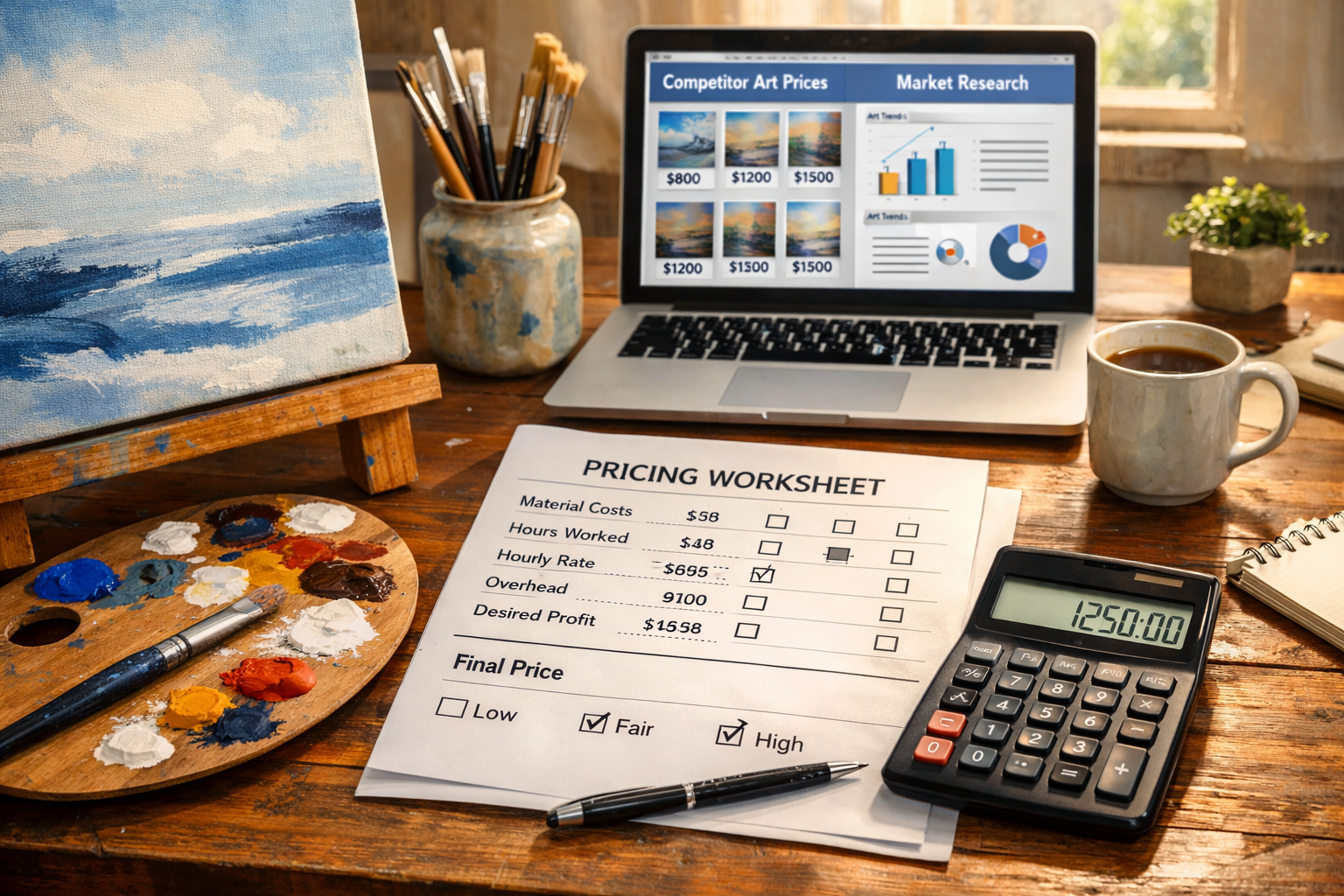
For emerging artists (fewer than 50 sales), use this formula:
- Calculate materials + time at £15-25/hour minimum
- Research 3-5 comparable artists at similar career stage
- Position within that range based on your exhibition history
- Add 10-15% for gallery commission if applicable
For established artists (consistent sales history), maintain pricing consistency:
- Increase prices only after selling 70%+ of a collection at current rates
- Raise by 10-20% increments, not dramatic jumps
- Document price history for collectors evaluating investment potential
Strategic pricing tactics that work in stagnation:
| Tactic | When to Use | Expected Outcome |
|---|---|---|
| Payment plans | Works £1,000+ | Increases buyer pool by 40% |
| Edition pricing | Prints/multiples | Creates entry points without devaluing originals |
| Commission incentives | Custom work | Maintains cash flow whilst building portfolio |
| Bundle offers | Multiple available works | Moves inventory without individual discounts |
Choose payment plans if you need steady cash flow and can afford 3-6 month payment cycles. Choose strategic discounts (10% maximum) only for bulk purchases or long-standing collectors, never as standard practice.
The Own Art scheme offers interest-free loans up to £2,500, making your work accessible without cutting prices. This government-backed programme shifts affordability concerns from your pricing to buyer financing options.
Edge case: If you’ve genuinely overpriced based on market comparables, adjust once decisively rather than gradual reductions that signal desperation. Reframe it as “collection pricing update” with clear rationale.
What Digital Signals Actually Drive Art Sales in a Flat Market?
Professional presentation and strategic visibility matter more than follower counts. Buyers in uncertain markets need confidence signals before committing, and your digital presence either provides reassurance or raises red flags.
Essential digital signals that convert browsers to buyers:
Photography quality (non-negotiable):
- Multiple angles including detail shots
- Consistent lighting showing true colours
- Scale reference (artwork in room setting)
- Professional editing without distortion
Provenance documentation:
- Clear creation date and materials
- Exhibition history if applicable
- Artist statement explaining concept
- Certificates of authenticity for works £500+
Responsive communication:
- Reply to enquiries within 24 hours
- Provide additional images on request
- Offer video calls for high-value pieces
- Transparent about condition and shipping
Platform optimization:
- Complete profiles on selling platforms
- Consistent pricing across channels
- Regular content showing process/studio
- Collector testimonials and reviews
Instagram remains powerful for discovery, but conversion happens through professional galleries or dedicated art platforms. The hybrid approach works best: Instagram for visibility, professional site for transactions. Our guide on selling art on Instagram without a website covers this strategy in detail.
Common mistake: Posting inconsistently then wondering why sales stall. Algorithms reward regular activity (3-5 posts weekly minimum), but quality trumps quantity. One excellent post weekly beats seven mediocre ones.
Quick example: An emerging painter increased sales 300% by adding room-setting mockups to listings. Buyers could visualise the work in their homes, reducing purchase hesitation. This simple addition cost nothing but 30 minutes per piece in Photoshop.
How Can Buyers Identify Genuine Value During Market Uncertainty?
Focus on artwork fundamentals—quality, provenance, and personal connection—rather than speculation about future values. Market stagnation actually benefits buyers willing to do basic due diligence, as sellers become more transparent and negotiable.
Value assessment checklist for buyers:
Authenticity verification (critical for works £500+):
- Request provenance documentation
- Verify artist identity through official channels
- Check for edition numbers on prints
- Use reverse image search for red flags
- Consider professional authentication for high-value pieces
Our comprehensive guide on spotting fake artwork covers verification techniques in detail, including what documentation legitimate sellers provide without hesitation.
Quality indicators beyond price:
- Materials: Archival papers, lightfast pigments, proper stretching for canvas
- Craftsmanship: Clean edges, consistent technique, professional finishing
- Presentation: Proper framing or mounting, signed and dated
- Documentation: Clear artist bio, exhibition history, press coverage
Pricing reality check:
- Research 5-10 comparable works by same artist
- Check auction records if available (though most emerging artists won’t have them)
- Compare similar artists at same career stage
- Factor in size, medium, and complexity
Choose emerging artists if you want affordable entry points (£200-£2,000) with potential appreciation and direct artist relationships. Choose established artists if you prioritise proven track records and easier resale, accepting higher entry costs (£5,000+).
The difference between original art and prints significantly impacts value and investment potential. Originals appreciate; prints generally don’t. Know which you’re buying and price accordingly.
Modern British and Contemporary artists show particular resilience in 2026, with collectors increasingly focused on environmental themes and climate change subjects[4]. This thematic focus creates opportunities for buyers interested in socially engaged work.
Edge case: Gallery closures during stagnation can create bargains, but verify artwork legitimacy carefully. Distressed inventory sometimes includes consignment pieces where ownership is unclear.
What Role Does Provenance Play in Maintaining Art Values?
Provenance—documented ownership and exhibition history—directly impacts resale value and buyer confidence, especially during uncertain markets when buyers scrutinise purchases more carefully. Strong provenance can add 20-50% to values; weak provenance raises red flags that kill sales.
Essential provenance documentation:
For sellers (build this from day one):
- Certificate of authenticity with artist signature
- Creation date and location
- Materials and techniques used
- Exhibition history with dates and venues
- Press coverage or critical reviews
- Previous ownership records
- Professional appraisals if obtained
For buyers (demand this before purchase):
- Written authenticity guarantee
- Artist contact information for verification
- Gallery or dealer credentials
- Shipping and insurance records
- Condition reports for older works
The UK remains the world’s largest distributor of Artist’s Resale Rights, having paid over £144 million to artists and estates since introduction[3]. This legal framework protects artists’ ongoing interests and creates transparent secondary market records.
How to build provenance as an emerging artist:
- Document everything: Photograph works in progress and finished pieces from multiple angles
- Maintain detailed records: Spreadsheet tracking each piece with creation date, materials, dimensions, sale date, buyer (if they consent)
- Seek exhibition opportunities: Even small group shows add credibility
- Collect testimonials: Ask buyers for brief statements about their purchase experience
- Register work: Consider blockchain certification services for high-value pieces
Common mistake: Assuming provenance only matters for expensive or historical art. Buyers at every price point value documentation. A £300 piece with proper paperwork sells faster than a £300 piece with nothing.
Quick decision rule: If an artist or gallery refuses to provide basic provenance documentation, walk away. Legitimate sellers provide this information readily.

When Is the Best Time to Buy or Sell Art in a Stagnant Market?
Strategic timing based on collector behaviour and market patterns yields better results than random listing or panic buying. Whilst market stagnation reduces dramatic seasonal swings, predictable patterns still exist.
Optimal selling windows:
September-November (strongest period):
- Collectors return from summer with refreshed budgets
- Corporate buyers finalise year-end purchases
- Holiday gift buying begins for accessible price points
- Gallery exhibition season peaks
January-March (secondary peak):
- New year collecting budgets activate
- Tax refund spending (February-April)
- Spring gallery openings and art fairs
- Reduced competition from holiday distractions
Avoid June-August: Holiday season sees reduced serious buying, though online browsing remains steady. List work but expect longer sales cycles.
Optimal buying windows:
December-January: Sellers need cash flow for holidays and year-end, creating negotiation opportunities. Galleries clear inventory for new exhibitions.
July-August: Summer slowdown means less competition and potentially motivated sellers, though selection may be limited.
Art fair timing: Major UK art fairs in 2026 include London Art Fair (January), Frieze London (October), and numerous regional events. Buying at fairs offers direct artist access and immediate possession, whilst selling through fairs requires gallery representation but provides concentrated collector access.
Our guide to the best UK art fairs in 2026 details specific events worth attending as buyer or exhibiting artist.
Strategic considerations beyond calendar:
For sellers:
- List 6-8 weeks before target selling period (allows algorithm visibility and collector discovery)
- Refresh listings with new images or descriptions if stagnant after 90 days
- Consider seasonal themes: coastal work sells better March-July, cosy interiors peak October-January
For buyers:
- Build relationships with galleries year-round for first access to new work
- Attend degree shows (May-July) for emerging artist discoveries at entry prices
- Use quiet periods for research and artist discovery without purchase pressure
The university degree show guide explains how to buy directly from graduating artists, often at career-low prices before gallery representation.
Edge case: Major artist exhibitions create temporary price spikes. If you own work by an artist with upcoming major show (like David Hockney’s March 2026 Serpentine exhibition or Barbara Hepworth’s summer Courtauld display[4]), consider selling just before or during the show when interest peaks.
How Should Art Buyers and Sellers Adapt to Cross-Border Trade Barriers?
Post-Brexit trade barriers significantly impact UK galleries and international sales, but strategic approaches minimise friction and costs. Cross-border sales remain viable with proper planning and clear buyer communication.
Key barriers affecting UK art trade:
- Customs declarations and administrative requirements
- Shipping cost increases (up 15-30% for EU destinations)
- VAT and import duty complications
- Temporary admission paperwork for fairs and exhibitions
These barriers particularly affect galleries participating in international fairs, which remain crucial sales channels despite added complexity[3].
For UK sellers shipping internationally:
Pricing strategy:
- Clearly state whether prices include international shipping
- Offer calculated shipping at checkout rather than flat rates
- Consider absorbing EU shipping costs for high-value works (£2,000+) to remain competitive
- Build customs/admin time into delivery estimates (add 5-7 days for EU, 10-14 for rest of world)
Documentation essentials:
- Commercial invoices with accurate valuations
- HS commodity codes for artwork
- Certificate of authenticity (reduces customs queries)
- Proper insurance with international coverage
Our detailed guide on UK art import taxes and duties covers specific requirements and costs for international transactions.
For UK buyers purchasing internationally:
- Confirm total landed cost (artwork + shipping + duties + VAT) before committing
- Verify seller handles customs paperwork correctly
- Allow extended delivery timeframes
- Consider domestic alternatives at similar price points to avoid complications
Shipping best practices:
- Use specialist art couriers for works £500+ (general couriers lack proper handling)
- Require insurance covering full replacement value
- Photograph packaging process for damage claims
- Track shipments and communicate proactively with buyers
The guide to shipping art safely recommends specific UK couriers and packaging techniques that minimise damage risk.
Strategic alternative: Focus on domestic markets during high-friction periods. The UK market alone represents £10.5 billion annually[3], providing substantial opportunity without international complications.
What Long-Term Strategies Build Sustainable Art Businesses Despite Market Fluctuations?
Sustainable art careers and collections depend on diversified approaches, consistent quality, and relationship building rather than chasing short-term trends or speculative gains. Market stagnation actually rewards these fundamentals.
For artists building sustainable practices:
Diversify income streams:
- Original sales: Core revenue but unpredictable timing
- Print editions: Accessible price points with recurring revenue
- Commissions: Steady income with advance payments (see our commission guide)
- Workshops/teaching: Predictable income whilst building audience
- Licensing: Passive income from existing work
Build collector relationships:
- Maintain email list of past buyers and interested parties
- Offer first access to new collections
- Share studio updates and process insights
- Provide excellent post-purchase service
Invest in professional development:
- Consistent technique refinement
- Exhibition opportunities (even small venues matter)
- Professional photography and presentation
- Copyright protection and business structure
Our guide on copyright for artists explains UK legal protections and how to enforce them.
Price work sustainably: The artist pricing guide provides frameworks for setting rates that reflect skill development whilst remaining market-appropriate.
For collectors building meaningful collections:
Define collecting focus:
- Geographic (British artists, regional focus)
- Thematic (environmental art, portraiture, abstraction)
- Medium (works on paper, sculpture, photography)
- Career stage (emerging vs established)
Budget consistently: Regular modest purchases (£200-500 monthly) build substantial collections faster than sporadic large buys. The £500 collection starter guide demonstrates this approach.
Document and protect:
- Photograph all acquisitions with scale reference
- Store provenance documents securely
- Insure collections appropriately (see art insurance guide)
- Maintain condition through proper display and storage
Consider advisory services: For collections exceeding £50,000 or complex acquisition strategies, professional guidance may justify the cost. Our overview of art advisory services in London helps determine if you need one.
Long-term perspective: Quality British and Contemporary art has demonstrated resilience across market cycles. Works by established artists purchased during the 2008-2010 downturn appreciated significantly by 2015-2020. Patient collectors benefit from stagnant periods through better selection and negotiation opportunities.
Frequently Asked Questions
Is now a good time to buy art in the UK? Yes. Market stagnation favours buyers through reduced competition, longer decision windows, and motivated sellers. Focus on quality work with proper documentation rather than speculative purchases.
How much should I negotiate on art prices? For primary market (direct from artist or representing gallery), 5-10% negotiation is reasonable for purchases £2,000+. Secondary market (resale) offers more flexibility, potentially 15-20% below asking. Always negotiate respectfully with clear purchase intent.
Do I need a gallery to sell art successfully? No. Many artists sell successfully through online platforms, Instagram, and direct relationships. Galleries provide credibility and collector access but take 40-50% commission. Hybrid approaches work well: online for accessible works, gallery for premium pieces.
What’s the minimum I should spend to start collecting? Start at whatever budget feels comfortable, even £100-300. Emerging artist work, prints, and works on paper offer excellent entry points. Focus on pieces you genuinely love rather than investment potential.
How do I verify an artist is legitimate? Check for consistent online presence, exhibition history, verifiable sales, and professional presentation. Contact galleries they claim to represent. Reverse image search their work. Legitimate artists provide this information readily.
Should I buy original art or prints? Originals offer uniqueness and appreciation potential but cost more. Prints provide affordable access to desired imagery but rarely appreciate. Choose based on budget and whether you’re collecting for enjoyment or investment. Our original art vs prints guide explains the differences in detail.
What size artwork should I buy for my space? For living room focal walls, artwork should cover 50-75% of available wall width. Our wall art size guide provides specific measurements and proportion rules.
How long does it typically take to sell artwork? In current market conditions, expect 60-120 days for emerging artist work at fair prices, 30-90 days for established artists. Premium pricing or niche subjects extend timeframes. Adjust expectations rather than panic-pricing.
Can I make money investing in art? Possible but difficult. Only 10-20% of contemporary art appreciates significantly. Focus on established artists with auction records if investment is primary goal. For emerging artists, buy because you love the work; appreciation is bonus not guarantee.
What are the best online platforms for buying UK art? Saatchi Art, Artsy, Rise Art, and Artfinder offer broad UK artist selection with buyer protections. Our review of the best online art galleries in the UK compares platforms in detail.
How should I display and care for artwork? Avoid direct sunlight, high humidity, and temperature extremes. Use UV-protective glazing for works on paper. Dust gently with soft brushes. Our colour psychology guide includes display tips for maximum visual impact.
Do I need insurance for my art collection? For collections exceeding £5,000 or individual pieces worth £1,000+, specialist art insurance provides better coverage than standard home policies. It covers damage, theft, and depreciation that general policies exclude.
Conclusion
Stagnant UK market navigation in 2026 rewards fundamentals over speculation. Whilst the UK art market faces competitive pressure from China and France, and gallery sales remain subdued compared to auction growth, opportunities exist for both buyers and sellers who focus on evergreen tactics rather than trend-chasing.
For sellers, success comes through confident pricing based on comparables, professional digital presentation, comprehensive provenance documentation, and strategic timing aligned with collector behaviour. Diversified income streams and relationship building create sustainability beyond individual sales.
For buyers, market uncertainty creates advantages through reduced competition and motivated sellers. Focus on quality, authenticity verification, and personal connection rather than speculative value. Build collections consistently within budget, document acquisitions properly, and protect investments through appropriate insurance and care.
The tactics outlined here—pricing confidence, digital excellence, authentication rigour, strategic timing, and relationship focus—work regardless of whether markets boom or stagnate. They’re called evergreen for good reason: they grow sustainable art practices and meaningful collections across all economic conditions.
Next steps:
- Artists: Audit your current pricing against comparables, upgrade photography, and document provenance for existing work
- Collectors: Define your collecting focus, set monthly budget, and research 5-10 artists in your target range
- Both: Build relationships through gallery visits, artist studio tours, and online engagement beyond transactional interactions
The UK art market’s resilience through economic cycles demonstrates that quality work finds buyers and passionate collectors find meaningful art. Navigate stagnation with strategy, patience, and focus on fundamentals that outlast temporary market conditions.
References
[1] Wall Art Market UK – https://www.grandviewresearch.com/horizon/outlook/wall-art-market/uk
[3] Art Basel and UBS Art Market Report 2026 – https://www.dacs.org.uk/news-events/art-basel-and-ubs-art-market-report-2026
[4] Art Market Trends in 2026 – https://www.dawsonsauctions.co.uk/news-item/art-market-trends-in-2026/
[7] Art Basel UBS Art Market Report 2026 Global Art Market Report – https://observer.com/2026/03/art-basel-ubs-art-market-report-2026-global-art-market-report/
[10] Art Market Research – https://www.ubs.com/global/en/our-firm/art/art-market-research.html