

It’s a question I’ve heard countless times in galleries and studios, a debate that often sparks more confusion than clarity: original art vs. prints. For the discerning eye, for someone looking to infuse their space with genuine character, this isn’t just a technical distinction. It’s about soul, value, and what truly resonates. I’m here to demystify it all, to guide you through the intricacies so you can make a choice you’ll love.
Understanding the Core Differences
Before we dive into the finer points, let’s establish a common ground. What exactly are we talking about when we say “original art” and “art prints”? The difference is profound.
What is Original Art?

Think singular. Unique. Original art is the artist’s direct, physical creation. It’s the moment they put brush to canvas, chisel to stone, or pen to paper. I see it as a tangible piece of the artist’s journey, a direct conduit to their vision and emotion.
This means it’s one-of-a-kind. Handmade. When you own an original, you possess something no one else in the world has. You feel the artist’s touch, the palpable texture, that inherent energy pulsating from the work. We’re talking about a true painting—oil, acrylic, watercolour—a charcoal drawing, a sculpture, or a complex mixed-media piece. No two are ever truly identical, even if the artist revisits a theme. That’s the magic.
What are Art Prints?
Now, art prints are a different beast entirely. They are reproductions. Copies. They take an original image and replicate it through various printing processes. While they share the visual information of the original, they lack that unique, hand-touched character.
We see multiple copies. Often, they make art more accessible, which I find fantastic. But it’s crucial to understand the hierarchy within prints themselves:
- Open Edition Prints: These are the most common. Unlimited reproductions. Generally, the lowest cost entry point.
- Limited Edition Prints: A finite number. Crucially, they are often signed and numbered by the artist, perhaps “5/100.” This scarcity adds value beyond open editions. I always tell collectors to check that signature and number carefully.
- Giclée Prints: These are high-quality fine art prints. They use archival inks on premium papers or canvas. Known for their incredible detail and remarkable longevity. For a print, a giclée often comes closest to replicating the original’s visual depth, though never its texture.
- Other traditional printmaking techniques like lithography, screen printing, or etchings also exist. These are often considered original art forms in themselves, as each print in the limited edition series is pulled directly by the artist or under their supervision, making each an ‘original print’ within that specific edition. A subtle but important distinction from a photographic reproduction.
Key Comparison: Original Art vs. Prints (Advantages & Disadvantages)
When clients ask me about the “better” choice, I remind them there isn’t one. Only the right choice for them. Let’s break down the critical distinctions.

Uniqueness and Exclusivity
This is where the rubber meets the road.
- Original Art: Truly one-of-a-kind. It is a sole possession. Its character is inimitable. No one else has it. Period.
- Art Prints: They are reproductions. You’re sharing the image with others. This makes them less exclusive, naturally, but also more accessible. I think of them as a wonderfully democratic way to enjoy art.
Price and Affordability
Money matters. Let’s be honest.
- Original Art: Expect a significantly higher cost. This reflects the artist’s time, the materials, their reputation, and, yes, the rarity. It’s an investment.
- Art Prints: Much, much more affordable. They democratize access to art, allowing you to bring beautiful imagery into your home without a crippling initial outlay.
Investment Potential & Value Appreciation
Many people buy art with an eye toward its future value.
- Original Art: This is where you see the strong potential for appreciation over time. Especially from established or emerging artists. An original artwork is a tangible asset. I’ve seen countless pieces grow in value, becoming significant assets in a collection.
- Art Prints: Generally, these hold decorative or sentimental value. Limited edition prints can appreciate, particularly from very famous artists, but less reliably than their original counterparts. I would never buy a print primarily for investment.
Emotional Connection & Artistic Experience
This is, for me, the most important differentiator. Art should make you feel something.
- Original Art: A deeper, more direct connection to the artist’s intent and process. You see the visible brushstrokes, you feel the texture, you sense the inherent energy. It has a presence. You’re looking at the actual thing the artist touched. I find that incredibly powerful.
- Art Prints: You still enjoy the image, absolutely. But it often lacks that visceral, tactile, and energetic depth of the original. It’s a window into the art, not the art itself.
Quality, Materials & Longevity
How long will your art last?
- Original Art: Crafted with professional-grade, archival materials. Designed for generations of preservation. With proper care, these pieces can outlive us all.
- Art Prints: High-quality prints, especially giclées, use archival inks and papers for impressive durability. However, standard, mass-produced prints may fade or degrade over time if not carefully handled or displayed. I always urge clients to check for “archival quality” if longevity is a concern with prints.
Display & Flexibility
Where does it go? How does it fit?
- Original Art: Often serves as a statement piece. It commands attention. Because of its value and sometimes fragility, it requires careful placement.
- Art Prints: Available in a vast array of sizes and finishes. This offers incredible flexibility for home decor, gallery walls, or even experimenting with different looks. You can swap them out without the same level of commitment.
How to Spot the Difference: An Authenticity Checklist
I’ve had clients bring me prints thinking they were originals, and vice versa. It happens. Here’s my quick guide to telling them apart.
Examining Texture and Brushstrokes
This is usually my first clue.
- Original Art: You’ll see visible, often irregular, uneven build-up of paint or material. It directly corresponds with the image’s colors and forms. Feel it. Light it from an angle. Shadows will dance on the peaks and valleys of the paint.
- Art Prints: Typically flat. Some attempt to mimic texture with clear texture paste, but it usually appears smeared over the image rather than organically integrated into it. It feels artificial. You might also spot a uniform, machine-made pattern.
Artist’s Signature and Numbering
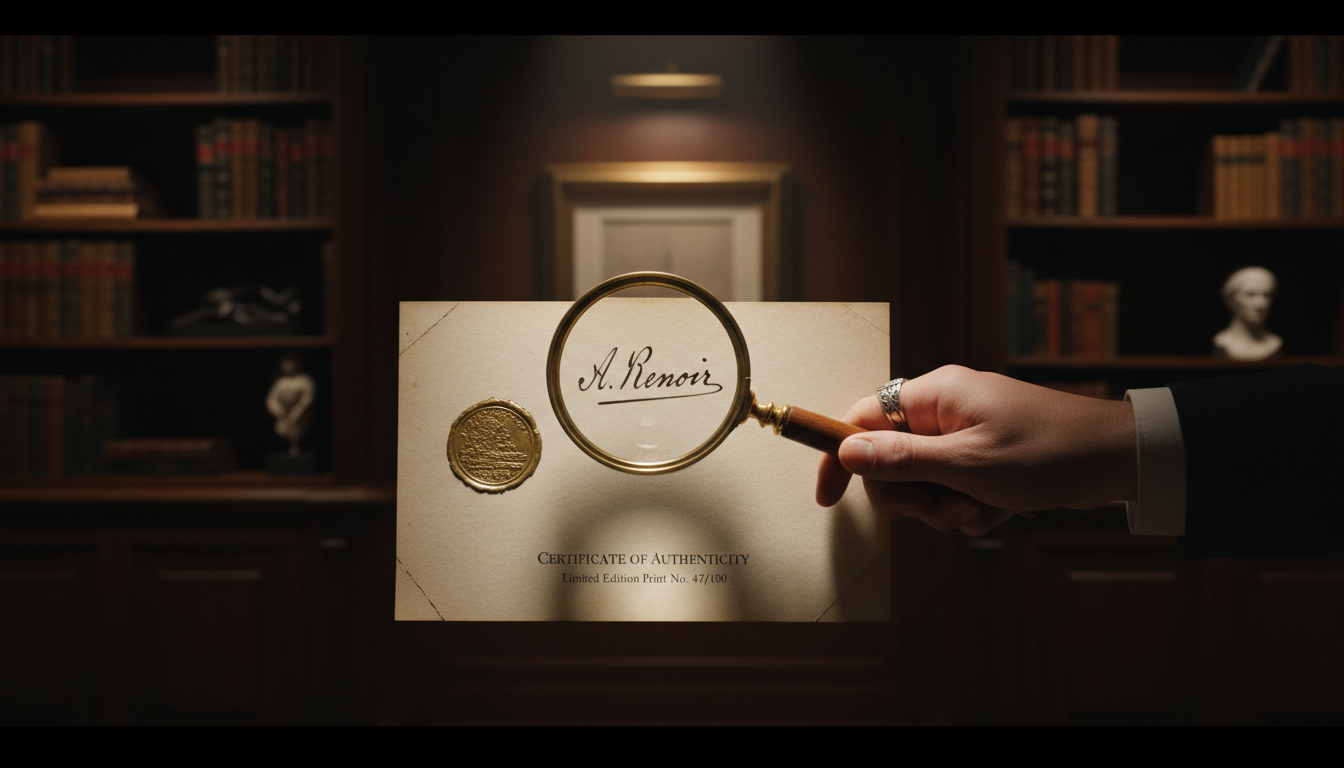
Crucial details often overlooked.
- Original Art: Hand-signed directly on the artwork itself. Sometimes dated. Unique to that single piece. The ink or pencil will be on top of the art material.
- Art Prints: Limited edition prints are almost always hand-signed in pencil, often on the bottom margin, and numbered (e.g., “1/100”). The signature might look slightly different from an original’s painted signature. Open edition prints may have a printed signature within the image, or none at all. I always recommend using a magnifying glass.
Edges, Lines, and Details
Look closely. Very closely.
- Original Art: May show subtle imperfections. Perhaps pencil lines from initial sketches. Slight variations in paint application on the edges of forms. A little bit of “messiness” is often a sign of the human hand.
- Art Prints: Tend to have sharp, clean, and often perfectly uniform edges. With some reproductions, a very close inspection might even reveal a dot-matrix pattern, the tell-tale sign of a printing process.
Quality of Materials
What’s it made on?
Look for artist-grade canvas, heavy, archival paper, or other specialised substrates for originals. For prints, check for archival quality stamps or descriptions. If it feels thin, flimsy, or overly glossy like a poster, it’s almost certainly a print.
Making Your Choice: What to Consider
Ultimately, your decision comes down to your personal priorities and circumstances. I always advise clients to consider these points.
Your Budget
First things first: what are you comfortable spending? Prints offer beauty and impact at an accessible price point. Originals, however, require a more significant, often substantial, investment. Neither is inherently better; they simply serve different financial realities.
Your Purpose for Buying Art
Why are you doing this? Are you purely decorating a room? Building a serious art collection? Investing in potential future value? Or are you simply seeking a deep, emotional connection to a unique piece? Your purpose will heavily sway your decision. For mere decoration, a quality print works wonders. For a collection, I believe originals are key.
Your Desired Connection to the Artwork
This is deeply personal. Do you prioritise owning something truly unique, something imbued with the artist’s literal hand and spirit? Or are you perfectly content with a high-quality reproduction of an image you love, without that direct, physical connection to its creation? Think about how you want to interact with the art in your daily life.
The Artist and Their Career
Consider where the artist is in their journey. You might choose to support an emerging artist through the purchase of their prints, making their work accessible while their originals are still building market value. Or, you might invest in the long-term value and legacy of an established artist’s original work. Both are valid ways to engage with the art world.
Where the Art Will Be Displayed
Evaluate the space. What kind of impact do you want? A large original piece often serves as an undeniable focal point, a conversation starter. Multiple prints, perhaps framed similarly, can create a stunning gallery wall, adding texture and storytelling without the singular financial commitment of an original. Think about the scale and prominence.
Conclusion: Embracing Your Art Journey
No Right or Wrong Answer: Personal Preference Reigns
I cannot stress this enough: there is no universal “better” choice between original art and prints. Both offer unique benefits, distinct advantages. The “right” answer depends entirely on your individual preferences, your personal goals, and your current circumstances. It’s your art journey.
The Joy of Art Ownership
Regardless of whether you choose the singular power of an original or the accessible beauty of a print, the most important aspect is this: select art that truly resonates with you. Choose pieces that bring joy, spark conversation, and infuse your space with character. That, my friends, is the true purpose of art ownership. Go forth and discover what moves you.