
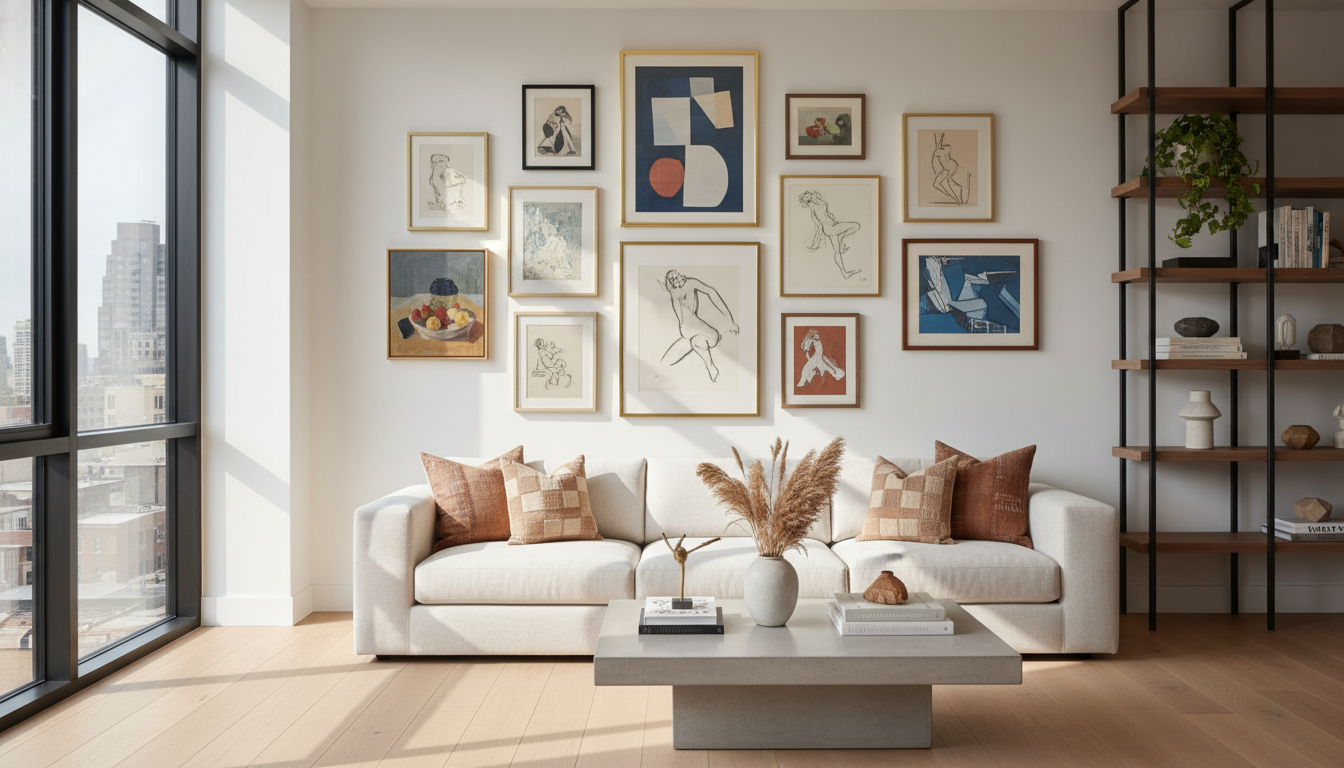
The persistent myth of the art world is that it is an exclusive playground for the ultra-wealthy—a realm of sealed auctions at Sotheby’s or six-figure invoices in Mayfair. For many art enthusiasts, this misconception creates a psychological barrier, relegating them to mass-produced posters or generic IKEA prints.
The reality, however, is radically different. The UK possesses one of the most vibrant, accessible, and democratised art markets in the world. With a budget of £500, you are not merely “buying a picture”; you are entering a tier of the market rich with emerging artists, high-quality limited edition prints, and unique works on paper.
Starting an art collection with £500 is not about compromising on quality; it is about strategy. It requires shifting your mindset from that of a consumer to that of a collector. It involves understanding the difference between a reproduction and an original print, knowing where to look, and understanding how to preserve your asset.
This guide provides a definitive roadmap for UK collectors ready to make their first meaningful acquisition.
The Pre-Purchase Phase: Defining Your ‘Curatorial Eye’
Before you spend a single pound, you must invest time in “getting your eye in.” A collection should not be a random assortment of objects; it should reflect a cohesive taste or narrative. The most common mistake first-time buyers make is rushing a purchase to fill a blank wall.
Visual Literacy and Mood Boarding
Treat your visual education as a prerequisite. Utilise platforms like Instagram and Pinterest, not just to browse, but to analyse. Create a dedicated board for “Potential Acquisitions.” After saving 20–30 images, review them. Do you see a pattern? Are you drawn to geometric abstraction, figurative realism, or street art aesthetics?
Physical Reconnaissance
Screens flatten texture and distort scale. You must view art in person to understand its materiality.
- The Institutions: Visit the Tate Modern or the V&A. While these works are not for sale, they set the benchmark for quality.
- Commercial Galleries: Do not be intimidated by the “White Cube.” Galleries in Shoreditch, Fitzrovia, or your local creative quarter are free to enter. Ask gallerists questions. A simple “I’m looking to start collecting and I’m interested in this artist’s process” can unlock a wealth of knowledge.
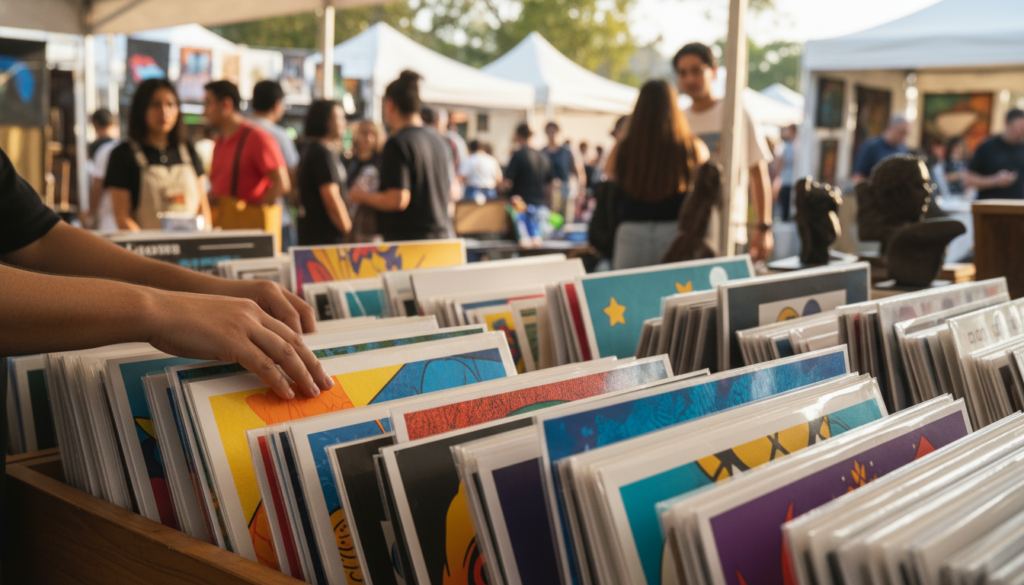
Strategic Acquisition: Where to Spend Your £500 in the UK
The “under £500” market is vast, but quality varies wildly. To maximise the value and longevity of your collection, you must know where the serious art is hiding.
1. Graduate and Degree Shows
This is the insider’s greatest secret. Every summer, top UK art schools host degree shows where graduating students sell their work.
- Target Locations: The Royal College of Art (RCA), Slade School of Fine Art, Central Saint Martins, and Goldsmiths in London; Glasgow School of Art in Scotland; and Manchester School of Art.
- Why Buy Here: You are buying original art from emerging artists before they have gallery representation (which typically doubles the price). A painting that costs £350 at a degree show might be £1,200 once the artist is signed.
2. The Art Fair Ecosystem
Art fairs gather dozens of galleries under one roof, creating a competitive environment that benefits the buyer.
- The Affordable Art Fair: Held in Battersea and Hampstead, this fair specifically targets the entry-level market. Galleries here are required to display prices, removing the awkwardness of asking.
- Woolwich Contemporary Print Fair: The only fair in the world dedicated to contemporary printmaking. This is a goldmine for finding etchings, screenprints, and lithographs well within the £500 budget.
- The Royal Academy (RA) Summer Exhibition: An open-submission show where famous academicians hang alongside unknown artists. Many works in the “Small Weston Room” are priced between £200 and £500.
3. Online Marketplaces and Curated Platforms
If you cannot travel, the digital landscape offers curated reliability.
- Artfinder: A UK-based marketplace connecting buyers directly with artists. Look for their “Editors’ Picks” or “Best of the Month” to filter for quality.
- Partnership Editions: A highly curated platform offering “drops” of affordable works by rising stars. Their “Under £500” section is meticulously vetted.
- Rise Art: Offers a “try before you buy” rental service, though for a £500 budget, direct purchase is usually more strategic.
Decoding Mediums: Originals vs. Prints
To make your £500 go further, you must understand what you are technically buying. A £500 budget usually means choosing between a small original or a significant limited edition print.
The Hierarchy of Prints
Do not confuse a “print” with a “poster.” A poster is a mass-produced reproduction with no intrinsic value. A fine art print is an original work of art.
- Giclée Prints: These are high-quality, archival inkjet prints. They are the most common entry point. Look for “Hahnemühle” paper and pigment-based inks, which ensure the colours won’t fade for decades.
- Hand-Pulled Prints (Screenprints, Etchings, Linocuts): These are physically made by the artist (or a master printer). Because they involve manual labour and distinct layers of ink, they often hold value better than digital prints.
- Edition Size: Always check the edition number (e.g., 12/50). A lower edition number (under 50) is generally more desirable than a high edition number (over 250).
Works on Paper
If you crave a “one-of-one” original but can’t afford a canvas, look for works on paper.
- Studies and Sketches: Artists often sell preparatory sketches or charcoal studies for a fraction of the cost of a finished painting.
- Watercolours and Ink: These mediums are traditionally cheaper than oil or acrylic but offer incredible intimacy and fluidity.
The Financial Hack: The ‘Own Art’ Scheme
For UK collectors, the Own Art scheme is the single most powerful tool for stretching a budget. Supported by Arts Council England, this initiative makes buying art more accessible.
How It Works
The scheme provides an interest-free loan (0% APR) of between £100 and £2,500 toward the purchase of contemporary art.
- The Strategy: Instead of spending your £500 all at once, you could use it as a deposit on a more expensive piece, or simply spread the cost of a £500 work over 10 months.
- The Math: A £500 limited edition print becomes £50 per month. This allows you to keep your liquidity or potentially buy two works (totaling £1,000) while still only paying £100 a month.
- Where: Look for the Own Art logo in galleries or on websites like the Royal Academy or Jealous Gallery.
The Hidden Costs: Budgeting for Preservation
A critical error new collectors make is spending their entire £500 on the artwork and leaving nothing for presentation. A £400 print in a cheap clip-frame looks like a student poster. A £50 postcard in a professional mount and bespoke frame looks like a museum piece.
The Framing Equation
Professional picture framing is not merely aesthetic; it is conservation.
- The Budget Split: A safe rule of thumb for a £500 budget is £350 for the art and £150 for the framing.
- What to Ask For: When visiting a framer, ask for “conservation mounting.” Ensure the mount board is acid-free (to prevent yellowing) and the artwork is not permanently glued to the backing.
- Glass Options: Standard glass is reflective. If your budget allows, ask for “anti-reflective” or “UV-protective” glass to prevent sun damage, though this may stretch the £150 allocation.
Certificate of Authenticity (COA)
Always ensure your purchase comes with a Certificate of Authenticity. This document, signed by the artist or gallery, proves the work is genuine. If you ever decide to sell or insure the work, the COA is essential provenance.

Advanced Strategy: The ‘Artist Proof’ and Studio Sales
For the collector looking for an edge, consider these two advanced tactics:
Hunting for Artist Proofs (AP)
When a limited edition run is printed (say, 50 prints), the artist usually keeps a few for themselves. These are marked “AP” or “A/P” instead of a number. Occasionally, these enter the market. While sometimes priced higher, they are arguably more prestigious as they originate from the artist’s personal archive.
Instagram Studio Sales
Follow artists directly on Instagram (search hashtags like #UKArtist, #LondonArtist, #StudioSale). Artists occasionally host “studio sales” to clear flat files, selling older works or slight imperfections at massive discounts—often 50% off gallery prices. This is a prime way to secure original works on a strict budget.
Common Mistakes to Avoid
- Buying for Investment First: Do not buy a £500 print expecting it to pay for your retirement. Buy it because you love it. Financial appreciation is a bonus, not a guarantee.
- Ignoring Size: A 10x10cm etching might look lost on a large wall. Measure your space before buying.
- Failing to Insure: Check your home contents insurance. Most standard policies cover items up to a certain limit (often £1,500), but you must list them.
- Buying ‘Decor’: Avoid mass-produced art from furniture stores. These have zero secondary market value and lack the soul of work by a living artist.
Implementation Checklist: Your Step-by-Step Plan
Use this checklist to execute your first purchase within the next 30 days.
- [ ] Week 1: Visit one physical gallery or degree show. Do not bring your wallet. Just look.
- [ ] Week 2: Follow 10 artists and 5 galleries (e.g., Unit London, Jealous, Print Club London) on Instagram.
- [ ] Week 3: Sign up for newsletters from Artfinder or The Other Art Fair to get alerts on new drops.
- [ ] Week 4: Select your piece. Verify the edition number and ask for the COA.
- [ ] Purchase: Use the Own Art scheme if available to spread the cash flow.
- [ ] Post-Purchase: Take the work immediately to a local framer. Discuss mounting options within your remaining budget.
Comprehensive FAQ
Q: Is £500 really enough to buy “serious” art?
A: Absolutely. While you won’t be buying a Banksy canvas, £500 is the sweet spot for high-quality limited edition prints (screenprints, lithographs) and original works on paper by emerging artists. It is a respectable entry point into the serious market.
Q: What is the difference between a limited edition print and a Giclée?
A: “Limited Edition” refers to the quantity produced (e.g., only 50 made). “Giclée” refers to the method of production (high-quality inkjet). A Giclée can be a limited edition. However, hand-pulled prints like screenprints are generally considered more valuable than digital Giclées because of the manual craft involved.
Q: Should I buy a framed or unframed piece?
A: Buying unframed is often safer and cheaper regarding shipping. It allows you to choose a frame that suits your specific interior and ensures the quality of the materials used. However, if a gallery offers professional framing at a bundled price, it can sometimes be a bargain.
Q: Can I negotiate the price of art?
A: In a primary gallery setting for works under £500, negotiation is rare. However, at art fairs or when buying multiple pieces, asking “Is there any flexibility on the price?” is acceptable. For a single £500 print, the price is usually fixed.
Q: Does art bought for £500 ever increase in value?
A: It can. If you buy a limited edition print from an emerging artist who later wins the Turner Prize or gets picked up by a major gallery like White Cube, the value of early prints can skyrocket. However, this is difficult to predict. Buy for passion first.
Conclusion
Starting an art collection with £500 is not about limitations; it is about potential. By focusing on limited edition prints, exploring graduate shows, and utilising the UK’s unique Own Art scheme, you can acquire pieces that possess genuine artistic integrity and personal meaning.
Remember, every great collection started with a single purchase. The goal is not to fill a wall, but to begin a lifelong conversation with culture. Your £500 is a vote of confidence in a living artist—make it count.